
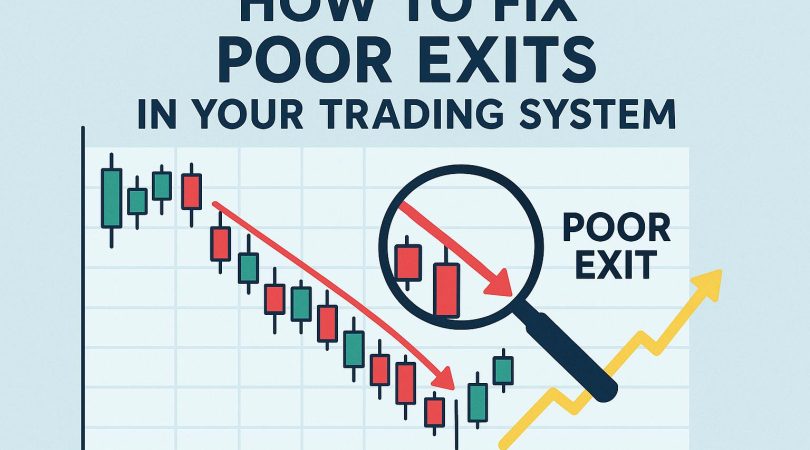
How to fix poor exits in your trading system

How to fix poor exits in your trading system

Understanding the Importance of Good Exit Strategies

In the landscape of trading, both entry and exit strategies play pivotal roles in defining the success of any operation. While much attention is often paid to identifying the right moment to enter a market, equally significant is knowing when and how to exit. A poorly timed or executed exit can turn what might have been a profitable trade into a costly mistake. Consequently, refining exit strategies is essential for maximizing profitability and ensuring sustained success over time.

Evaluating Your Current Exit Strategies

Before diving into the realm of enhancements, one must first gain a comprehensive understanding of their current practices. Evaluating existing exit strategies involves identifying and acknowledging patterns that contribute to ineffective exits. This stage is critical in trading because an understanding of past mistakes can guide efforts toward finding substantive solutions.

Quantitative Analysis

Undertaking a quantitative analysis of past trading data provides a foundational basis for recognizing inefficiencies. This approach involves examining several critical metrics, such as the win-loss ratio, average profit and loss per trade, and the risk-reward ratio. By leveraging these statistics, traders can gain insights into their trading patterns and the effectiveness of their current exit strategies. Such data can form an evidence-based approach to identifying areas for improvement and ensuring that changes are data-driven rather than based on conjecture.

Psychological Factors

Beyond the numbers, the human element in trading—the psychological component—plays a significant role. Emotions such as fear and greed often cloud judgment and prompt traders to make irrational decisions concerning their exits. Recognizing these psychological influences is key to managing them proactively. Acknowledging the underlying emotional triggers that affect trading decisions is the first step for traders aiming to improve their decision-making processes.

Implementing Improved Exit Strategies

Once the pitfalls of current strategies have been identified and understood, traders can start implementing changes to enhance their exit methodologies. Several methods and tools can facilitate the development of a robust exit strategy, allowing traders to optimize outcomes.

Setting Clear Targets

Establishing clear and achievable profit targets before entering a trade provides structure and discipline. By having predefined objectives, traders can minimize emotional decision-making, ensuring their actions are guided by strategy rather than impulse. Leveraging technical indicators, such as support and resistance levels, can aid in setting these targets, offering tangible markers to base decisions upon.

Using Trailing Stops

Trailing stops present a sophisticated risk management technique that can be an asset in maintaining profitability under dynamic market conditions. By adjusting the stop price at a fixed amount below the market price for a long position, traders can maximize their gains from favorable market movements. This approach ensures that profits can be locked in even when the market exhibits volatility and turns.

Adopting Risk Management Techniques

To develop effective exit strategies, embracing sound risk management practices is paramount. Integrating these techniques enables traders to shield against potential losses and safeguard their ability to participate in future trading opportunities.

Position Sizing: One key tenet of risk management is the appropriateness of position sizing. By risking only a small percentage of overall capital on individual trades, traders can mitigate their exposure to significant losses, ensuring the preservation of enough capital for future transactions.

Stop-Loss Orders: Implementing stop-loss orders serves as a protective measure by automatically exiting trades if market conditions turn unfavorable. This helps to limit potential downside risks and supports adherence to predetermined risk tolerance levels.

Seeking Continuous Improvement

Even after implementing enhanced strategies, continuous evaluation and refinement remain critical. The trading landscape is ever-changing, requiring relentless adaptation to maintain efficacy in exit strategies.

Review and Reflect

Maintaining a consistent practice of reviewing and reflecting on trading activities is vital for ongoing improvement. By regularly analyzing a trading journal, traders can glean insights from both successful and unsuccessful exits. This process of reflection supports an understanding of what elements contribute to success and which ones require further refinement.

Stay Informed

In a field as dynamic as trading, staying informed about market developments and advancements in strategies is indispensable. Engaging with trading communities, keeping up with financial news, and considering specialized courses or educational resources can provide traders with fresh perspectives and innovative insights. These inputs play a significant role in effectively adapting exit strategies to align with evolving market conditions.

For traders looking to deepen their understanding of exit strategies further, various platforms specialize in financial education and trading strategy development. Engaging in forums and communities can lend additional perspectives and peer feedback, substantially enhancing the pursuit of mastery in exit strategy formulation.
How to fix poor entries in your trading system

How to fix poor entries in your trading system

Identifying Poor Entries in Your Trading System

Trading can be an intricate and challenging venture, where a variety of issues can impact overall success. Among these, poor entry signals are particularly noteworthy as they can significantly detract from potential profits. For traders committed to honing their strategies, recognizing and addressing these faulty entries is crucial. Below, we will explore the primary factors contributing to poor entries in trading systems and suggest techniques to identify and rectify them for enhanced trading performance.

Comprehensive Data Analysis and Interpretation

A core aspect of successful trading is the rigorous analysis of data. Poor entry signals often emerge when data is either misinterpreted or inaccurately compiled. Here, we delve deeper into how traders can refine their data practices to improve system entries.

Data Quality: Traders must ensure the integrity of their data inputs. Financial data should be accurate and obtained from reputed financial service providers. High-quality data minimizes the risk of misinformation leading to erroneous trading decisions. Regular updates and cross-checks with multiple sources can enhance data reliability.

Analysis Tools: Choosing the right analytical tools is equally essential. Reliable analytics tools should align with the trader’s specific strategy, providing relevant insights into potential market movements. Traders should invest time in understanding tool functionalities, ensuring that they leverage the full potential of these resources for precise signal generation.

Ensuring that both the data and tools used for analysis are robust is a foundational step towards minimizing error and optimizing trading outcomes.

Overcoming Emotional Influences on Decision-Making

Trading is not solely a numbers game; it engages the trader’s emotions, often leading to subjective decisions that may not align with their strategic goals. Emotional influences can lead to impulsive entries, derailing a well-thought-out trading plan. The following methods are effective in minimizing emotional interference:

Predefined Rules: One of the most effective measures to guard against emotional intrusions is establishing predefined entry rules. Such rules provide a structured framework within which traders can operate, thereby reducing the likelihood of rash decisions spurred by emotional highs or lows. Automation of these rules can further aid in maintaining objectivity, especially during turbulent market conditions.

Mindfulness Practices: Incorporating mindfulness into one’s trading routine can significantly aid in maintaining emotional equilibrium. Practices such as meditation, deep-breathing exercises, and even scheduled breaks can help traders center themselves, promoting clear and rational decision-making. Such techniques can be particularly beneficial in high-stake situations, providing traders with a moment to pause and reflect before committing to an entry.

Building these practices into daily routines fosters an analytical and objective mindset, crucial to successful trading.

Enhancing the Effectiveness of Technical Indicators

Technical indicators form the backbone of many trading strategies, guiding traders on potential entry points. However, not all indicators perform optimally across varying market conditions. Enhancing these indicators’ effectiveness can substantially boost trading accuracy.

Backtesting: Regular backtesting allows traders to simulate strategy performance using historical data. This exercise provides invaluable insights into the strategy’s strengths and weaknesses, enabling traders to fine-tune parameters for more accurate future entries. Through rigorous backtesting, traders can gain confidence in their strategies, reducing over-reliance on intuition.

Adaptive Indicators: Markets are inherently dynamic, and static indicators may fail to capture shifting conditions accurately. Incorporating adaptive indicators, which adjust parameters based on real-time data inputs, can offer clearer and more responsive entry signals. These indicators better align with market trends, providing timely insights into entry opportunities.

Tailoring and adapting technical indicators to reflect market nuances ensures traders are not caught out by shifts they did not anticipate.

Regular System Evaluation for Continual Improvement

A trading system’s success hinges on continuous evaluation and improvement. Analyzing past performance and staying responsive to emerging trends are pivotal in refining entry signals over time.

Performance Review: Traders should regularly document and review their trading histories, identifying patterns or recurring circumstances leading to poor entries. This reflective practice highlights potential areas for improvement, guiding traders towards more informed and effective strategies.

Adapting to Market Changes: The financial markets are subject to numerous influences, from economic policies to geopolitical changes. Staying abreast of these factors is crucial for adjusting trading strategies in line with the current market environment. Resources such as Investopedia can provide in-depth information and analyses that inform strategic adjustments, keeping a trader’s approach current and competitive.

By consistently evaluating and refining their systems, traders can mitigate the risk of poor entries and capitalize on emerging market opportunities.

Conclusion

Achieving success in trading demands meticulous attention to detail and the continual refinement of strategies. Poor entry signals represent a significant challenge but can be effectively addressed through precise data analysis, emotional management, the use of adaptive technical indicators, and regular system evaluations. By fostering an analytical and adaptable mindset, traders can enhance the accuracy of their entries and optimize overall trading performance. Recognizing the dynamic nature of markets and remaining vigilant in strategy assessment will undoubtedly bolster trading outcomes.

How to spot patterns in your trading mistakes

How to spot patterns in your trading mistakes

Understanding Your Trading Mistakes

Identifying patterns in trading mistakes is crucial for evolving as a successful trader. It involves analyzing past trades, understanding where errors consistently occur, and applying the lessons learned to future trading. This approach helps in minimizing repeated errors, thus increasing overall profitability.

Keep a Trading Journal

Any experienced trader will affirm that maintaining a detailed trading journal is an effective way to track your trades and reflect on mistakes. It serves as a mirror reflecting all the intricacies of your trading behavior. Documenting each trade in your journal, including the rationale, entry and exit points, outcomes, and even the emotions felt during the trade, can be a goldmine for self-improvement.

This practice allows you to spot patterns and recurring mistakes over time, effectively transforming these insights into learning opportunities. As you regularly update your journal, you’ll notice specific patterns or consistent errors, which you can then work to rectify. This valuable tool not only aids in identifying mistakes but also in celebrating wins, helping you understand what works and why.

Analyze Your Trading Strategy

A robust trading strategy is essential for consistency and success. Evaluating your trading strategy should be a non-negotiable routine. Regularly review and assess whether your strategy aligns with your trading goals, market conditions, and personal risk tolerance.

The financial markets are dynamic and ever-changing. Therefore, what worked yesterday might not work today. Look for inconsistencies or flaws in the strategy that may lead to repeated mistakes. This constant re-evaluation ensures that you stay adaptable and responsive to market changes.

Furthermore, it is beneficial to stay updated with new and emerging trading strategies and insights to refine your approach continually. As you gain more experience and knowledge, your strategies should evolve and improve to mitigate potential mistakes.

Recognize Emotional Responses

Emotions are an inherent part of human nature, but they can heavily influence trading decisions, leading to irrational behavior and mistakes. Recognizing when emotions like fear or greed dictate your trading can help you gain control over your trades. Each emotion can have a destructive effect on decision-making if not properly managed.

Implement techniques like setting predefined stop-loss orders, which act as a safety net against emotional trading. Additionally, sticking to a well-structured trading plan can help keep emotions in check. Being mindful of emotional triggers and learning how to respond to them can result in better trading outcomes and the reduction of emotionally-driven mistakes.

Identify External Influences

Trading doesn’t occur in a vacuum, and it’s subject to myriad external influences. Examine the external factors that affect your trading, such as economic reports, geopolitical events, or market news, and consider how they influence your decisions.

Understanding these factors is crucial as they often form the backdrop against which trading decisions are made. Sometimes, they can lead to inevitable mistakes. Recognizing these influences allows traders to discern which mistakes are within their control and which are dictated by external conditions. This recognition can help you focus on what you can change and let go of what you cannot.

Seek Feedback and Continuous Learning

No matter how experienced you become, there’s always room for improvement. Engage with fellow traders and seek feedback to gain diverse perspectives on your trading approach. Engaging with a community can offer insights into how others perceive your strategies and methods.

Participate in forums, attend webinars, or take part in workshops to enhance your trading knowledge. These platforms not only provide education but also a sense of camaraderie among traders, which can be beneficial for feedback and support.

Continuous education and learning from peers and experts are vital in identifying and rectifying trading patterns. As a continuously evolving discipline, trading requires ongoing learning. Being open to new information and experiences can significantly enhance your trading acumen.

In conclusion, spotting patterns in your trading mistakes involves a structured approach of self-reflection, strategy analysis, and openness to learning. By systematically addressing these elements, traders can evolve and enhance their trading performance effectively. Over time, these practices can transform mistakes into valuable lessons that contribute to a more sophisticated, informed, and ultimately, successful trading journey. By fostering a mindset of continuous improvement, traders can stay ahead of the curve, capitalizing on opportunities while minimizing costly errors.