
How to review your trades like a professional

How to review your trades like a professional

Understanding the Importance of Trade Reviews

One key aspect of trading that separates amateurs from professionals is the practice of reviewing trades. This process is crucial for identifying strengths and weaknesses in your approach, ensuring continuous improvement over time. A systematic review aids in understanding market dynamics and refining strategies. In essence, to navigate the complexities of financial markets effectively, traders must make trade reviews an integral part of their trading routine.

Setting Up a Structured Review System

An essential step in refining trading strategies is establishing a structured review system. This systematic approach not only enhances self-awareness but also cultivates a disciplined mindset essential for successful trading.

Setting the Foundation with a Trading Journal

A trading journal serves as the cornerstone of a structured review system, offering profound insights into trading patterns and a comprehensive record of past decisions. The journal’s primary function is to document all relevant details of each trade meticulously.

Begin by logging entry and exit points—an essential facet that allows traders to dissect the timeline of trades accurately. Recording the trade size is equally critical as it provides insights into the risk management aspects of trading activity. Understanding how different trade sizes impact the overall portfolio is invaluable for effective risk management.

Equally important is the thorough documentation of the market conditions during trade execution. By noting the environment in which trades are undertaken—such as prevailing volatility levels or impactful news events—traders can later associate external factors with trade outcomes.

Analyzing Trade Outcomes for Deeper Insights

The critical phase following any trade is analyzing its outcome with an objective lens. Whether a trade culminates in success or failure, dissecting the factors leading to the result is essential for deriving valuable lessons.

A pertinent starting point for analysis is questioning if the trade unfolded as planned or if unexpected elements influenced the outcome. Additionally, introspecting whether emotional factors influenced decision-making is crucial. Such insights allow traders to recognize and mitigate emotional biases in future trades.

Utilizing Metrics for Evaluation

The incorporation of quantitative metrics in trade reviews transforms subjective assessments into objective evaluations, facilitating a more comprehensive performance overview.

Understanding and Applying Key Metrics

The win rate, defined as the ratio of profitable trades to the total trades executed, serves as a primary performance indicator. A high win rate generally reflects effective strategy execution. However, it must be interpreted within the broader context of risk management and potential rewards.

The risk-reward ratio, another cornerstone metric, offers insights into the strategic potential of trades by comparing expected returns against potential losses. Maintaining an optimal risk-reward ratio is fundamental for long-term profitability.

The average gain/loss metric provides a detailed analysis of profitability by contrasting the average earnings from successful trades against losses incurred from unsuccessful ones. This metric helps traders identify if the profit on successful trades outweighs losses from trades that didn’t work out as planned.

Recognizing Patterns and Trends

During consistent trade reviews, traders can identify recurring patterns and trends within their trading activities. Recognizing these elements can unveil profitable trade setups and simultaneously reveal common pitfalls leading to losses.

Identifying such patterns allows traders to pivot away from strategies that consistently underperform and refine approaches that show promise. This ongoing refinement process is crucial in adapting to evolving market conditions and identifying new opportunities.

Incorporating Feedback Loops

Feedback loops are instrumental in fostering ongoing professional growth within trading endeavors—a process centered around utilizing insights gained from trade reviews to refine strategies and enhance decision-making processes.

Implementing Adjustments through Feedback

Regular strategy adjustments, driven by insights from structured reviews, can significantly enhance overall trading performance. As traders recognize patterns, they implement changes to strategy components such as entry and exit criteria, trade sizing, or risk management protocols.

Moreover, acknowledging the dynamic nature of financial markets underscores the need for adaptability. Regular feedback loops enable traders to pivot promptly and capitalize on opportunities that emerge from changing market conditions.

Continuous Education and Adaptation

The volatile and ever-evolving nature of markets necessitates ongoing education and a commitment to adaptation. Keeping informed about the latest trends, strategies, and market developments is crucial for competitive advantage.

Engaging with trading communities, participating in forums, and accessing educational resources from reputable financial websites such as Investopedia empowers traders with up-to-date knowledge and diverse perspectives. This continuous learning process not only aids strategy refinement but also helps in sustaining long-term competitiveness.

Conclusion

In conclusion, reviewing trades like a professional demands a disciplined approach anchored in systematic evaluation, leveraging quantitative metrics, and a relentless pursuit of learning. By thoroughly analyzing each trade, traders not only sharpen their understanding of market dynamics but also refine their strategies for better decision-making.

This iterative learning process encompasses recognizing personal strengths and weaknesses, adapting to market changes, and incorporating innovative strategies. Through such diligent reviews, traders can progressively enhance their performance, paving the way for greater success in financial markets.
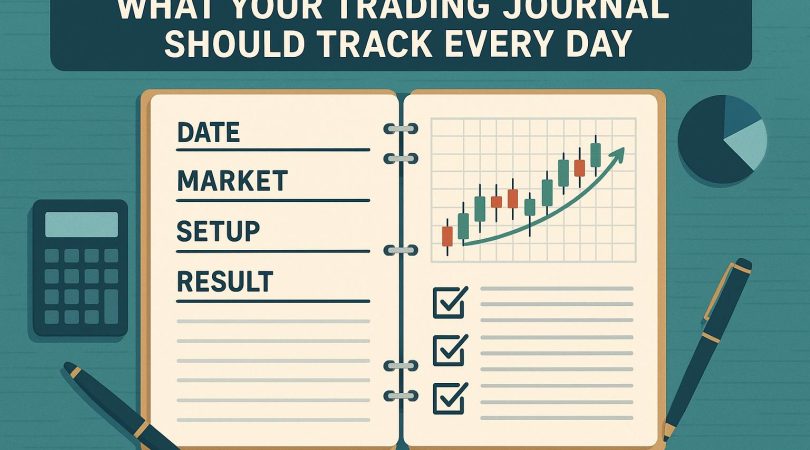

What your trading journal should track every day

What your trading journal should track every day

Introduction

Maintaining a trading journal is a crucial practice for any trader looking to refine their strategy and improve performance. A well-documented journal provides insights that are instrumental in understanding the nuances of trading and making informed decisions. This article outlines the essential elements your trading journal should track daily to optimize your strategies and outcomes.

Trade Details

At the core of any trading journal are the details of each trade. These should include the date and time of the trade, the financial instrument involved, and the quantity or size of the position. Recording these helps in monitoring trading frequency and managing portfolio risk effectively.

Entry and Exit Points

Documenting the exact entry and exit points is fundamental. This includes the price at which the trade was opened and closed. Tracking these data points helps in analyzing how well your timing aligns with market movements and the effectiveness of your execution strategy. By keeping an eye on these aspects, traders can identify whether they are consistently buying and selling at optimal points or if they might be following patterns that lead to subpar results.

Moreover, the entry and exit points provide a tangible measure of your trade execution skill. They allow you to compare different methodologies and see which ones lead to the most favorable results. Are you aligning with market momentum accurately, or are you often entering too early or too late? These factors can have a substantial impact on your profitability and need careful evaluation.

Trade Rationale

It is important to articulate the reasoning behind each trade. This involves stating the specific signals, market conditions, or analyses that prompted the decision to open or close a position. Over time, this practice can identify patterns in your decision-making and pinpoint areas for improvement. Detailing your trade rationale ensures that every trade is made based on sound judgments rather than impulse.

By documenting the analysis or events that influenced your trading decision, you capture a snapshot of your trading thought process. This can include technical analysis signals, such as pattern breakouts or indicator crossovers, as well as fundamental factors like earnings announcements or geopolitical news. Recording this reasoning is not just about accountability but also about creating a feedback loop to refine strategy over time.

Market Conditions

Understanding the broader market context during each trade is vital. Traders should note prevailing trends, news events, and any relevant economic indicators. This information can clarify how external factors influenced the outcome of the trade.

Having a clear view of the market conditions helps you assess whether external variables may have impacted your trade’s success or failure. Whether markets are trending, range-bound, or exhibiting high volatility can substantially affect trade outcomes. Therefore, recording market conditions provides context that can help explain why specific trades worked while others did not. This knowledge is valuable for adjusting your strategy in response to changing market dynamics.

Risk Management Strategies

A detailed account of the risk management strategies applied, such as stop-loss orders and position sizing, should be tracked. It allows you to evaluate whether you are consistently applying your risk management rules and how they impact overall results.

Adhering to robust risk management principles is critical for long-term success in trading. By documenting the stop-loss levels, target profits, and position sizes, traders can reflect on their discipline in managing risk. This record should highlight whether they are respecting their predefined risk thresholds or if emotional decisions are leading to undue risk exposure. Over time, this insight will help refine risk management processes and protect the trading account from significant losses.

Trade Outcome and Performance Metrics

Beyond recording whether a trade was profitable, tracking performance metrics like return on investment (ROI) and win/loss ratios assists in evaluating the effectiveness of your trading strategy. Consistent analysis can guide necessary adjustments to your approach.

By regularly reviewing metrics such as ROI, traders can gauge the efficiency of their capital deployment. Higher returns indicate more effective use of capital, while lower returns might suggest inefficiencies that need addressing. Similarly, a regular review of win/loss ratios can shed light on the probability of profitable trades versus losses, guiding improvements in trade selection criteria.

Emotional and Mental State

Trading is not just a technical endeavor—it also involves emotions and psychology. Keeping notes on your emotional state before, during, and after trades can provide insights into behavioral patterns that might affect decision-making. Over time, recognizing these patterns can help in developing strategies to mitigate emotional biases.

Emotions like fear, greed, or overconfidence can distort perception and lead to irrational decisions. Documenting your emotional state can reveal triggers that consistently lead to poor trading outcomes, such as fear-induced early exits or greed-driven oversized positions. Through self-awareness and understanding these patterns, traders can work on minimizing emotional interference in their trading process.

Conclusion

A comprehensive trading journal is an indispensable tool for traders aiming to enhance their craft. By systematically recording and reviewing details like trade entries and exits, rationale, market conditions, risk management, performance metrics, and emotional states, traders can identify strengths and weaknesses in their approach. This ongoing analysis is essential for making informed adjustments to strategies and achieving long-term success.

For more tips on maintaining an effective trading journal, visit tradingpsychology.com or similar resources for further insights.

Developing the discipline to maintain a trading journal and review it regularly can provide invaluable lessons and insights. Over time, this practice can foster continuous improvement and adaptation, which are crucial in the ever-evolving world of trading. As markets change and your trading style evolves, your journal will serve as a historical record of your growth as a trader, guiding you toward more consistent and successful outcomes.

How to use a trading journal that gives useful feedback

How to use a trading journal that gives useful feedback

Understanding the Importance of a Trading Journal

Maintaining a trading journal is an invaluable tool for any trader looking to improve their strategies and overall performance. It serves as a comprehensive record of trades, enabling traders to analyze their techniques, identify patterns, and refine their decision-making processes. A well-maintained journal helps traders understand what works and what does not, leading to improved success rates over time.

Basic Elements of a Trading Journal

A trading journal should include several key elements to provide comprehensive feedback. Firstly, each entry should record the date and time of the trade, along with the asset involved. This temporal and categorical documentation allows traders to track trading activities within specific market environments. Additionally, traders should note the entry and exit points for each trade, documenting the price at which they bought and sold the asset. This data is crucial for evaluating the accuracy of market entry and exit strategies and understanding how price movements influence decision-making.

Recording the position size and trade duration also provides context that is essential for analysis. Understanding the scale of each trade in relation to the overall portfolio can help in managing risk, while knowing how long a trade was held offers insights into the timing strategies employed.

Tracking Emotions and Rationality

To effectively use a trading journal, it is essential to also document the rationale and emotions behind each trade. Include notes on why specific decisions were made and feelings experienced during the process. For example, did a particular market news influence the decision? Or perhaps there was a feeling of anxiety that led to a premature exit? This reflective practice can uncover personal biases or emotional influences on trading habits.

Over time, it becomes easier to distinguish between emotionally driven decisions and those based on solid analysis. Identifying these emotional cues can improve discipline and lead to more rational, data-driven trading decisions.

Regular Review and Analysis

To gain useful feedback, it’s crucial to review entries regularly. Set aside dedicated time each week or month to analyze past trades thoroughly. Look for patterns in successful trades versus those that resulted in losses. This analysis should reveal which strategies yield the best outcomes and which may require adjustments. For instance, consistent losses in trades made under specific market conditions might suggest the need to reevaluate methods used in such scenarios.

Identifying frequently appearing mistakes can provide a roadmap to improving future trades. A systematic review process helps in refining strategies and enhancing overall trading acumen, encouraging continuous improvement.

Utilizing Technology for Data Insights

Many traders find that utilizing technology can enhance the effectiveness of a trading journal. Software solutions or online platforms designed for trade tracking offer additional features, such as graphical data representations and automated performance metrics. These technological tools allow for dynamic visualization of trading data, making it easier to spot trends and anomalies at a glance.

Some applications can even link directly to your brokerage account, providing real-time data and analysis. This integration can streamline the process of logging trades and keep the journal updated with minimal manual input, ensuring that it remains a tool of relevance and accuracy. Furthermore, data analytics features offered by such platforms can automatically calculate critical metrics like average win rate, risk-reward ratios, and drawdowns, providing deeper insights with less effort.

Conclusion

Using a trading journal effectively requires commitment and consistency. By documenting each trade thoroughly and reviewing them regularly, traders can gain critical insights into their performance. This practice not only aids in understanding past successes and failures but also helps in developing a disciplined and systematic approach to future trades.

The continuous process of analysis and improvement enhances a trader’s ability to navigate fluctuating markets, ultimately increasing the likelihood of long-term success. A well-maintained trading journal acts as both a guide and a mirror, reflecting current abilities and opportunities for growth, paving the way towards strategic and informed trading.

How to recover from a bad trading week

How to recover from a bad trading week

Understanding the Setback

Experiencing a bad trading week is a universal phenomenon encountered by traders at all levels of experience. It is crucial to grasp that occasional adverse outcomes are part and parcel of the trading process. Financial markets are driven by numerous factors and can be unpredictable. Having a realization that a negative trading week does not define your entire trading capability assists in maintaining a balanced outlook. This understanding will enable you to separate short-term losses from your overall trading proficiency, allowing you to stay focused on long-term objectives.

Analyzing the Cause

Upon facing a setback in trading activities, the primary step involves a critical examination of the causes behind the losses encountered. Evaluating trades to detect any patterns or decision-making processes that may have contributed to poor outcomes is key. Questions you should critically consider include:

  • Was it due to market conditions? – Analyze if your losses occurred because of unfavorable market trends or external economic factors that were beyond your prediction or control. Recognizing such conditions can help you understand whether the setback was genuinely avoidable or part of inevitable market fluctuations.
  • Did I follow my trading plan? – Scrutinize if you adhered to your pre-determined trading strategy. Often, stepping away from an established plan can lead to haphazard decision-making, resulting in loss. Identifying deviations from your plan will prepare you to stick with disciplines in the future.
  • Were there any emotional decisions involved? – Trading can be emotionally taxing, leading to decisions that are driven by fear or greed. Reflect on whether emotions influenced your trading choices more than logic or analysis, and identify patterns that lead to emotional trading decisions.

Thoroughly understanding what went awry allows you to isolate errors and prevent their recurrence, setting a foundation for improved performance in subsequent trading activities.

Reassessing Risk Management

The phase of reassessing your risk management tactics is indispensable after encountering a bad trading week. Scrutinize whether you’re applying essential risk management rules that safeguard your trading capital. It is critical to configure stop-loss orders for every trade to cap potential losses and limit the portion of your capital invested in a single trade. The aim is to protect yourself against dramatic market swings and ensure sustainability over the long term. Furthermore, leveraging resources like a comprehensive guide can extend your understanding of effective risk management methodologies. This process aids in reinforcing a disciplined approach to managing your investments and fortifying your trading plan.

Emphasizing Psychological Resilience

The ability to maintain psychological resilience is pivotal when recovering from trading setbacks. Regular education and practice in managing emotional responses can prevent stress from hampering rational decision-making. Techniques like meditation can aid in stress reduction and fortify your mental state to resist impulsive actions. Meanwhile, engaging in a hobby can provide relief and a mental break from trading pressures. One effective method is keeping a trading journal, where documenting emotional responses can offer insights into personal behavior patterns that contribute to undesirable decisions. By identifying and addressing these patterns, you can bolster your emotional resilience and establish a more centered approach to trading practices.

Planning Future Trades

Utilize the knowledge acquired through analysis and evaluation to shape your future trading activities. Develop a disciplined trading plan, integrating the lessons gleaned from previous experiences. This plan should be dynamic, accommodating continuous learning and adaptability to changing market conditions. Setting realistic aims is indispensable, as these can guide decisions and provide motivation. Continuous observation of market trends and updates is crucial as well; staying informed enables you to anticipate movements and prepare strategic responses that align with your trading approach.

In conclusion, both resilience and perpetual enhancement are essential elements for achieving enduring success in the trading arena. By understanding setbacks and adapting strategies accordingly, you heighten your trading acumen and lessen the potential adverse impacts of future losses. The objective is to cultivate a sustainable pathway where your trading activities align with overarching goals while maintaining a balanced and rational mindset throughout various market conditions. Such an approach ensures a robust trading framework which is imperative in navigating the complex financial markets effectively.