How to choose a trading style that fits your life

How to choose a trading style that fits your life

Understanding Different Trading Styles

Choosing a trading style that aligns with your lifestyle and personality is crucial for success in financial markets. Trading styles are diverse, with each requiring different levels of time commitment, analysis skills, and risk tolerance. Understanding these differences will help you select a suitable approach.

Day Trading

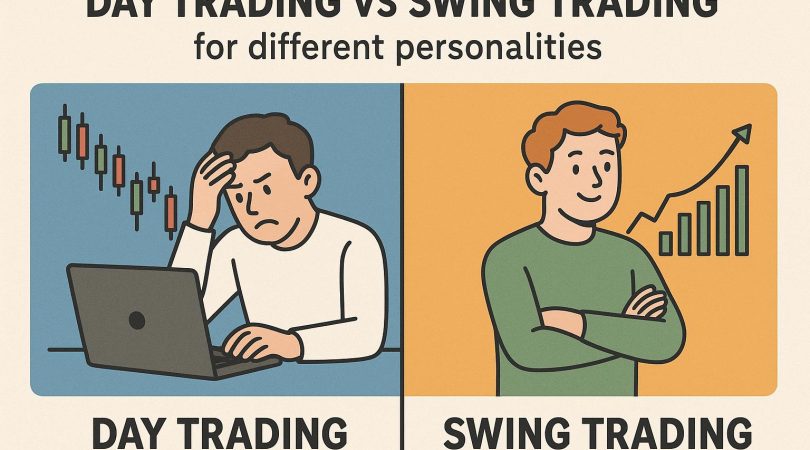
Day trading involves buying and selling financial instruments within the same trading day. Day traders aim to capitalize on short-term price movements, often exiting positions by the market’s close. This style demands intense focus, quick decision-making, and the ability to manage stress, as it involves frequent trades. It’s best suited for individuals who can dedicate substantial time during market hours. Day trading requires familiarity with technical analysis, chart patterns, and a reliable trading platform with real-time data. Success also depends on the ability to stay calm under pressure and to quickly interpret market news and chart signals.

Day traders typically employ strategies such as scalping, momentum trading, and news trading. Scalping focuses on small price gaps created by order flows or spreads, while momentum trading involves identifying and riding a stock exhibiting a strong trend. News trading hinges on capitalizing on market reactions to news events, requiring the trader to be extraordinarily quick and decisive.

Many day traders rely on leverage to increase their buying power; this can magnify profits but also intensifies risks. Risk management techniques, such as setting stop-loss orders and defining risk per trade, are crucial in this fast-paced environment. Beyond technical skills, the commitment to a disciplined trading plan is fundamental, involving rigorous mental and emotional discipline.

Swing Trading

Swing trading occupies a middle ground between day trading and long-term investing. Swing traders hold positions for several days or weeks, aiming to profit from short- to medium-term market moves. This style requires less constant attention than day trading, making it compatible with individuals who balance trading with other commitments. Swing traders typically use technical analysis to identify short-term trends and patterns, sometimes incorporating fundamental analysis to a lesser extent.

This trading style is attractive to those who can’t monitor markets throughout the day but can spend a few hours in analysis each evening. Given that positions are held for longer, swing traders often combat overnight and weekend market risks, which can lead to gaps in market prices at opening. Stop-loss and take-profit orders are often used to manage potential downside while capturing gains, respectively.

Successful swing trading often requires a well-crafted plan, patience, and discipline. Traders must remain vigilant for entry and exit signals while being prepared to adapt their strategies as market conditions evolve. Familiarity with technical indicators like moving averages, relative strength index (RSI), and stochastic oscillators is beneficial. Swing trading is slightly more forgiving in terms of emotional rigors compared to day trading, enabling traders to plan and reflect rather than constantly react in real time.

Positional Trading

Positional trading involves holding trades for weeks, months, or even years. This style emphasizes longer-term trends and fundamentally driven trades. Positional traders generally need a keen understanding of fundamental analysis and the patience to ride out market volatility. This approach is suitable for those with minimal time to monitor daily market activities.

Positional traders focus on the long-term potential of an investment, banking on significant market moves over time. They often analyze economic indicators, company financials, industry conditions, and geopolitical factors to identify investments with strong growth prospects. This method demands a solid grasp of the company or asset’s underlying fundamentals, as well as the industry’s broader economic landscape.

Patience and a steadfast approach to market fluctuations are essential qualities for positional traders. They are less concerned with daily price movements and focus on broader market trends. Unlike day traders and swing traders, positional traders are often less affected by short-term volatility and require fewer transactions, potentially reducing transaction costs.

While positional traders are less active on a day-to-day basis, they must remain vigilant over the longer term. Keeping abreast of quarterly earnings reports, macroeconomic changes, and policy shifts can influence the long-held investment thesis and necessitates adjustments in strategy. As with any trading style, risk management is crucial, with strategies in place for diversification and allocation to mitigate unexpected market downturns.

Choosing Your Trading Style

When choosing a trading style, consider your time availability, risk tolerance, and personal preferences. Evaluate how much time you can commit to trading daily and your comfort level with market risk and overnight market events. Reflect on whether you thrive in fast-paced environments or prefer a more steady, long-term approach.

Your decision should align with your financial goals. If achieving quick returns is essential, day trading might be your best suit, provided you can manage its inherent stresses and time demand. Alternatively, if you’re more focused on capitalizing on long-term trends and can weather interim volatility, positional trading could be more appropriate. For many, the flexibility offered by swing trading, balancing analysis depth with lifestyle compatibility, serves as an appealing middle ground.

Acknowledging personal behavior and emotion management during market fluctuations can guide your selection. Fast-paced trading demands acute emotional control, while long-term investing requires the patience to adhere to an investment thesis despite market noise.

Trial and Adaptation

Selecting the right trading style is not a one-time decision. Trial and adaptation are essential components of this process. It may be beneficial to experiment with different styles using demo accounts to determine which resonates and suits your lifestyle best. Regularly assess and refine your approach to stay aligned with your circumstances and financial goals.

Engaging with trading communities, seeking mentorship, and continuously educating can widen your perspective on applying trading styles. Developing flexible strategies that adapt to evolving market conditions and personal circumstances are vital. Embrace changes as learning opportunities, refining your methods to optimize your trading journey over time. Ultimately, successful trading aligns personal capabilities and market needs, creating a harmony of discipline, strategy, and adaptability.

How to define your edge before risking real money

How to define your edge before risking real money

Understanding Your Edge in Trading

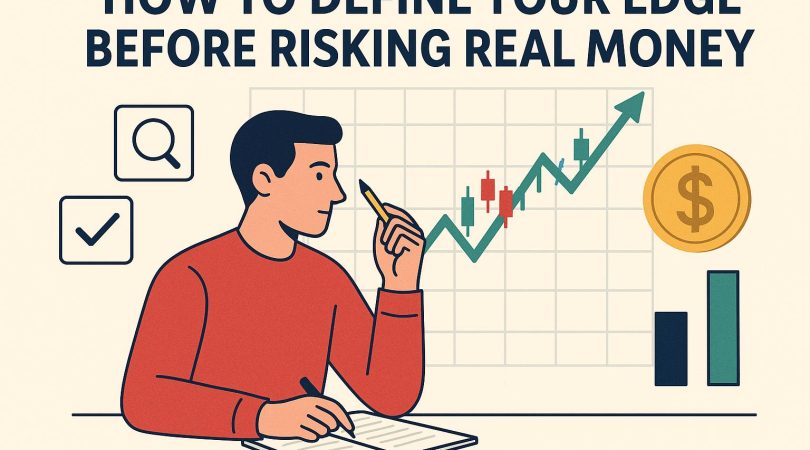
Defining your edge before investing real money in trading is a critical step. It serves as the foundation for achieving consistent results and managing risk effectively. An edge in trading refers to a strategy or technique that gives you an advantage over time. However, identifying and refining this edge requires careful analysis and a systematic approach.

Identify Your Unique Strategy

To effectively define your trading edge, it is imperative first to identify your unique strategy that sets you apart from the majority of traders. This could be in the form of a particular pattern, a market indicator, or a combination of signals that consistently lead to profitable trades. Every successful trader has a strategy that they understand deeply and can apply with confidence. The formation of such a strategy comes from a mix of intuition, learned skills, and rigorous practice. However, it is essential to thoroughly test any developed strategy through backtesting before committing real capital to it.

The market is an amalgamation of numerous factors, making it simultaneously unpredictable and full of opportunities. By identifying a unique approach, traders can zero in on recurring patterns or signals that offer an advantage. For example, a trader might specialize in technical analysis leveraging moving averages or oscillators to generate trading signals. Alternatively, a trader might prefer fundamental analysis, focusing on economic indicators or company earnings reports to make informed decisions. The key is to focus on what aligns with your skill set and interests which often results in better execution of trades.

Analyze Past Performance

A step that should not be overlooked is the analysis of past performance. Delving into your previous trades can provide invaluable insights into understanding what works and what fails. By conducting a thorough evaluation of historical data, you can identify patterns and strategies that have yielded consistent returns. This process should not only focus on the successes but equally on the failures. Each unsuccessful trade holds lessons that are critical to evolving your strategy.

This analysis should include an assessment of risk/reward ratios and how your strategy performs under varying market conditions. There might be specific circumstances or timeframes under which your strategy underperforms; identifying these can help in tweaking the strategy or developing a contingency plan. Traders often put emphasis on creating a well-balanced portfolio that can endure both bullish and bearish trends.

Backtest Rigorously

Backtesting is an invaluable tool that involves running your strategy over historical data to ascertain its effectiveness. This exercise aids in verifying whether your identified edge is consistent over time. While it is crucial to remember that past performance does not guarantee future results, a strategy that has demonstrated good performance historically may possess a greater potential for success in the future.

The process involves utilizing software that can simulate the trading strategy on historical data. The goal is to analyze various parameters like entry and exit points, stop-loss levels, and profit targets. Successful backtesting provides confidence in the strategy and replaces guesswork with analytical reasoning. Traders need to be aware of the pitfalls of over-optimization during backtesting, where a strategy is too finely tuned to past data and may not perform well in future scenarios.

Utilize Trading Journals

Maintaining a trading journal is a practice that experienced traders swear by. It serves to document every trade made, including the rationale behind entering the trade, the outcome, and any alterations made during the trade. This ongoing documentation is immensely beneficial for objectively reviewing your tactics and refining your strategy based on empirical evidence.

The initiative helps in capturing the nuances that numbers on a screen cannot convey. Over time, the entries provide a wealth of knowledge, revealing performance trends, emotional triggers, and external factors influencing the trades. By continually interacting with the journal, it becomes a personal mentor, offering lessons and insights unique to your trading journey.

Understand Risk Management

Even with a finely defined edge, risk management remains paramount in the trading sphere. Before initiating any trade, it is crucial to determine the amount of capital you’re willing to risk, ensuring it aligns with your overall financial goals and comfort level. Understanding how each trade impacts the broader portfolio is essential, granting you the power to make informed decisions.

Risk management tools such as stop-loss orders and position sizing form the backbone of a robust trading plan. Stop-loss orders are designed to limit potential losses by automatically executing a trade to exit a position once it hits a predetermined price level. On the other hand, position sizing helps in controlling the amount of capital allocated to each trade. By employing these tools, traders can keep emotions in check and restrict the downsides associated with market unpredictability.

Stay Informed and Flexible

Markets are exceptionally dynamic, and a strategy that works today may become obsolete tomorrow. Therefore, staying informed about market developments and economic indicators is crucial. Being well-versed in current events grants traders the ability to spot emerging opportunities or threats, allowing timely responses.

Additionally, traders must be flexible and willing to adapt or evolve their strategies as new information and technologies emerge. The rapid evolution of financial markets, driven by technology and globalization, demands that strategies remain malleable. Embracing this adaptability preserves the relevance of the trading strategy and enhances the ability to pivot when necessary.

Seek Continual Improvement

Striving for continual improvement should be at the heart of every trading endeavor. Continually refining your edge by evaluating new strategies and learning from each trading experience establishes a cycle of enhancement. Education and ongoing research are vital components of this process, allowing traders to stay competitive and informed.

Consider joining trading forums, enrolling in courses, or attending webinars to bolster your knowledge and skills. These platforms provide access to a wealth of resources and a community of like-minded individuals where experiences and knowledge can be shared. Additionally, reading books by reputable trading professionals widens perspectives and introduces novel methodologies.

For those seeking structured education, visiting professional trading education sites such as Investopedia or domain-specific training platforms can prove advantageous. By cultivating a mindset centred around lifelong learning, traders can continually expand their arsenal of trading techniques and theories, thereby enhancing their overall market competence.

Final Thoughts

Defining your trading edge is a continuous journey rather than a one-time event. By systematically identifying, analyzing, and refining your strategies, you will position yourself better to navigate the complexities inherent in trading with a focus on long-term success. As you build out your trading framework, the pursuit of an edge enables you to engage in informed decision-making, ultimately contributing to sustainable growth and resilience in the face of market adversity.